

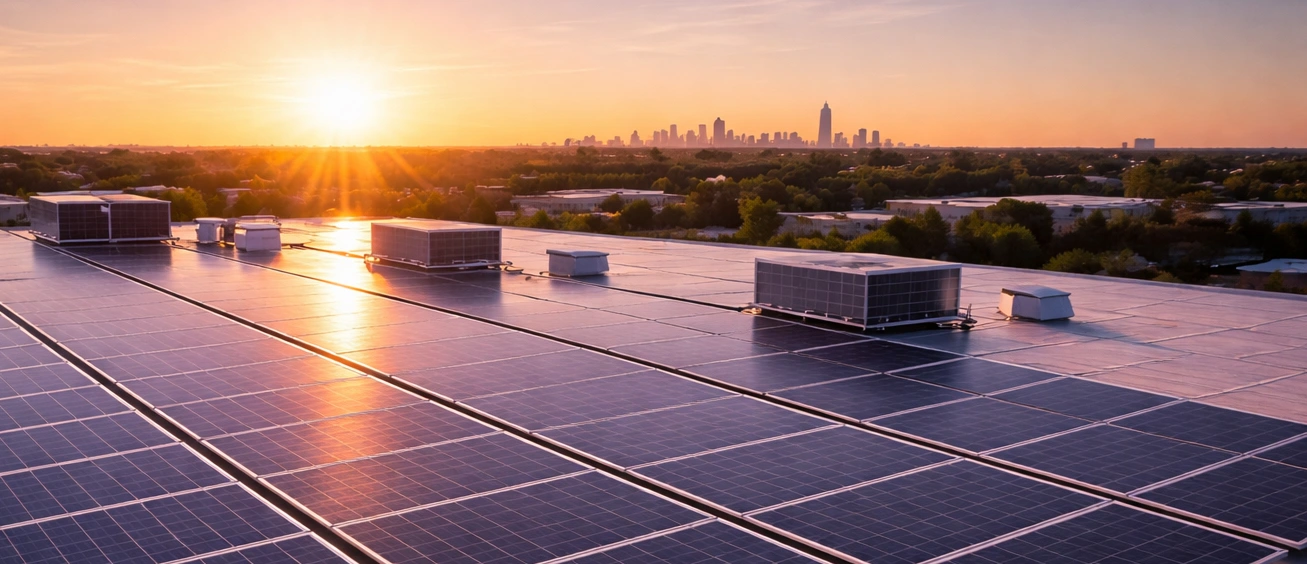

Rising electricity costs, expanding data centers, and stronger state incentives are pushing more Illinois property owners to look at solar in a new way: not as a feel good add-on, but as an asset that can cut operating costs and increase building value.

In a recent on-air conversation, Andrei Turea, co-owner and CEO of Green Attic Roofing, explained how his company approaches solar as part of a whole-building energy efficiency strategy, starting with insulation, then roofing, then solar.
The message was simple: if you treat your building like a system, you can unlock bigger savings and avoid common pitfalls.
Why Solar is Getting More Attention
Solar is gaining even more attention right now because:
- Electricity prices keep rising, making solar a smart way for homeowners and businesses to lock in long-term savings and protect against future rate increases.
- New data centers are being built rapidly, and their high energy demand is accelerating investments in cleaner, more reliable power solutions like solar, which helps strengthen grid stability and expand local energy capacity.
Andrei also noted that the growth of solar farms across Illinois shows how much momentum the technology has gained. Solar panel efficiency has improved significantly over time, and while he described recent improvements as more incremental, today’s systems are designed to perform for decades.
Andrei claimed that Green Attic Roofing installs are typically warranted for 25 years, and in real-world conditions many continue producing power beyond that.
Commercial as the Biggest Opportunity for Solar
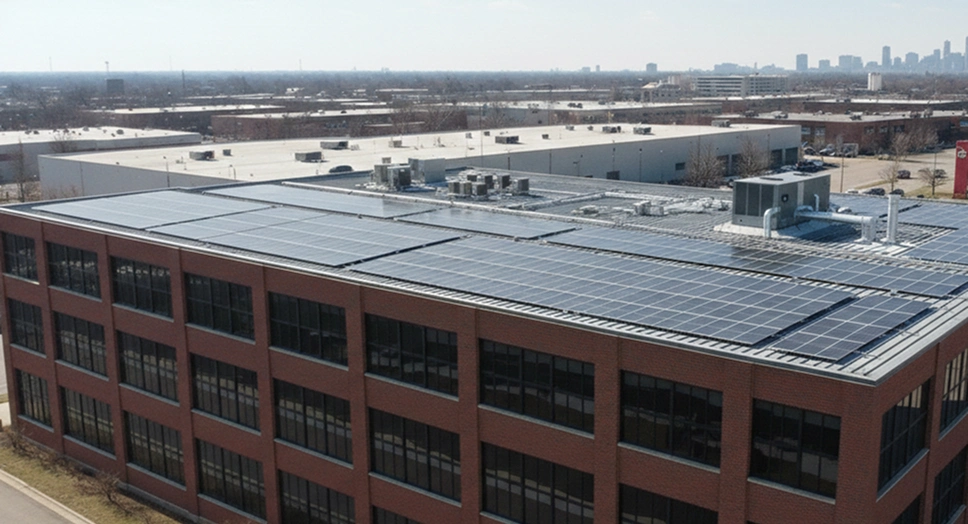
Green Attic Roofing can install solar for residential properties, but Andrei emphasized the bigger opportunity lies in commercial, especially big flat-roof buildings such as warehouses.
Those roofs often represent a valuable, untapped space with strong potential for solar. Add solar, and they can become a revenue and savings source that:
- Reduces monthly electricity bills
- Increases property value
- Generates excess electricity that can be sent back to the grid during high-production months
Andrei highlighted that commercial properties can benefit from stacked incentives that dramatically reduce net costs.
Incentives and Rebates: Big Savings Potential
Here are three incentive sources that can offset a major portion of a solar project:
- Illinois Shines (state program)
- ComEd incentives (utility program)
- Federal tax credit for commercial solar (with timing requirements)
In some commercial cases, incentives can offset up to 90% of the project cost, depending on system size and specifics. He also noted that larger projects can sometimes unlock stronger economics.
Federal Tax Credit Timing
While residential federal rebates have ended, commercial solar still has an active federal tax credit window, giving businesses a strong opportunity to maximize savings. Projects should be in motion before July 4, 2026, with the goal of wrapping everything up by December 2027, to take advantage of the Federal Tax Credit.
In practical terms, property owners can stay on track by signing a contract and kicking off engineering and permitting early, which helps clearly show the project has started.
He added that because future incentive terms may change, many businesses are choosing to act now to secure today’s benefits while they are available.
Net Metering Style Payback Explained
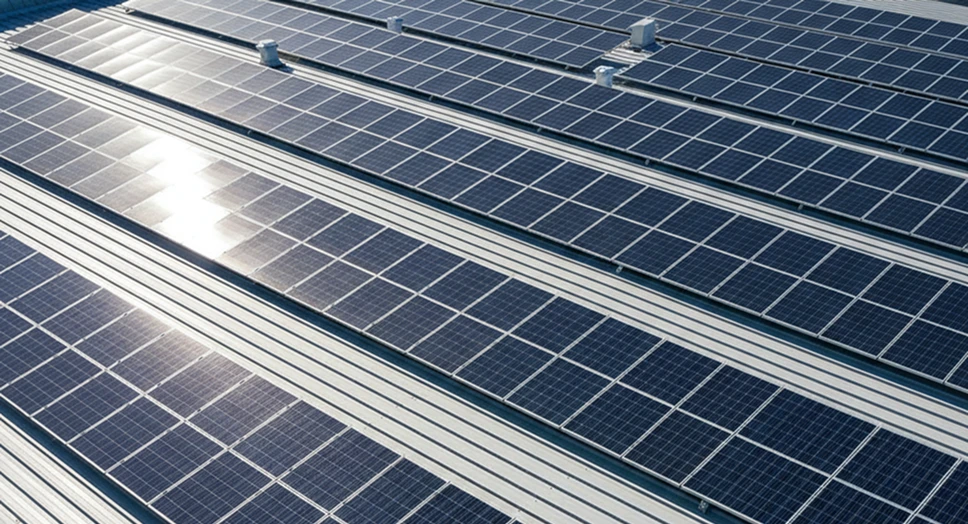
Solar panels generate electricity from sunlight and UV radiation, even on overcast days. That means production does not drop to zero when skies are gray.
Here is an easy, step-by-step look at how solar panels turn sunlight into real energy savings:
- Your building uses the electricity your panels produce first.
- Any excess electricity goes back to the grid, effectively selling power back during higher production periods like summer.
- In winter, when panels produce less due to shorter days or snow, the grid seamlessly fills in the difference so your power stays consistent.
Andrei claimed that many systems can offset 70%–80% of electricity costs, and in some cases even reach 100%, depending on usage patterns and system design.
Is Illinois Sunny Enough for Solar?
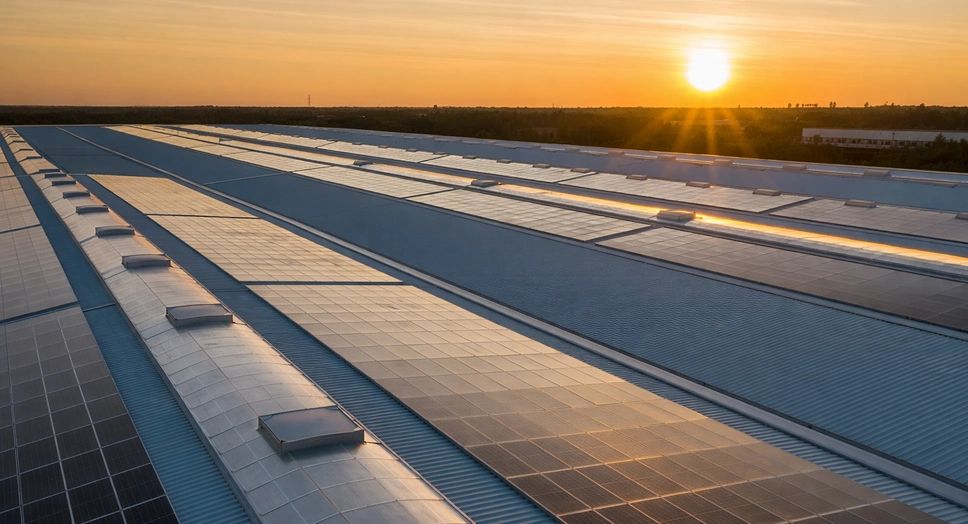
Yes, Illinois is sunny enough for solar because it still produces energy in cloudy conditions because the panels are responding to available solar radiation and UV, not just the visible “bright sun” feeling people associate with summer days.
Andrei also pointed to places farther north, like Minnesota, where solar still performs well, as proof that Illinois can be a practical market for solar.
Factors to Consider for Solar Roof
Before installing solar on a commercial building or residential properties, it’s a smart opportunity to evaluate the entire site as a system so you can maximize performance, efficiency, and long-term value. The right setup can deliver decades of savings, while a rushed install can create avoidable costs later.
Roof Age and Long-Term Planning
Solar panels can stay up for about 25 years, and in some cases even 30 years. Because of that, it’s often smarter to address an older roof first before adding solar, so your panels sit on a solid, long-lasting foundation and you get the most value from the installation.
For example, you can consider replacing a roof that is 10 years old with about 10 years of life left before solar installation so the roof and the panels align for the long run.
Roof Type and Direction
With flat roofs, panels can be easily positioned to face south for strong sun exposure.
On flat-roof systems, panels can typically be positioned and angled to face south to maximize sun exposure and energy production.
For pitched roofs, the team assesses which side receives the most direct sun so the panels are installed for maximum efficiency and savings.
Aesthetics
Modern panels look cleaner than earlier versions, often all-black and seamless. Andrei shared that flat-roof solar installs keep a clean exterior look, since the panels sit neatly on top of the building.
What to Do Next if You are Exploring Commercial Solar
If you are exploring solar as an owner or manager of a commercial property, Andrei suggested starting with these steps:
- Evaluate the roof’s condition and longevity to support a smooth, worry-free installation.
- Confirm the roof’s orientation and sun exposure to unlock the best solar performance.
- Estimate your energy demand and define an offset goal to guide a smart, efficient design.
- Identify the best incentives available right now, including Illinois Shines and ComEd programs.
- Take action early to lock in incentives and keep the project moving smoothly through permitting and engineering.
Why Roofing Experience Matters for Solar Installation
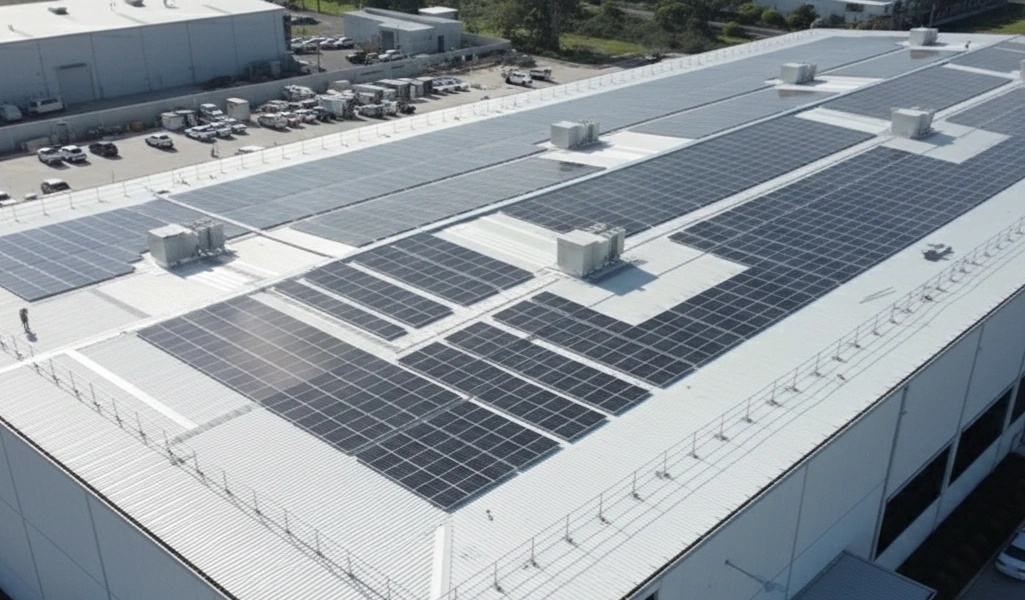
Solar roofing experience matters because it helps ensure your long-term solar investment is built on a strong, reliable roof, so everything performs beautifully and stays protected for years to come.
An installer who truly understands roofing knows how to protect the roof system while adding racking, penetrations, and flashing, so performance does not come at the cost of leaks or premature roof wear.
Green Attic Roofing team helps clients get the best long-term results by confirming the roof has enough remaining life to match the panels’ 25-year lifespan. In those cases, it can make financial sense to replace the roof first, then install solar, so the full system lifespan lines up.
When roofing and solar are handled together, the project becomes simpler and more secure. Instead of treating solar as a standalone add-on, a roofing-first mindset evaluates roof condition, remaining lifespan, and the best plan to keep the building watertight, then integrates solar in a way that protects the structure and maximizes the value of the upgrade for years to come.
A Company Built Around Energy Efficiency
Green Attic focuses on energy efficiency first, starting with insulation, to help a home or commercial building stay comfortable and reduce wasted heating and cooling. From there, the company expands into roofing and solar so customers can address multiple upgrade needs through one team.
A whole-house or whole-building approach sets solar up for the best results by aligning the system with the entire property’s needs. Roof condition, energy use, shading, insulation, and electrical capacity all come together to maximize performance and long-term value.
If a roof is aging, addressing it before installing solar can help you avoid the added expense of removing and reinstalling panels later.
About Green Attic Roofing
Green Attic Roofing is a roofing contractor serving the Chicagoland area, offering residential and commercial roofing services focused on durability, clean workmanship, and energy-efficient solutions.
In addition to roof inspections, repairs, and replacements, we also provide services that support better home performance, such as attic insulation, helping homeowners improve comfort and efficiency while protecting their property.
We also offer solar options, including Tesla Solar Roof installations, for homeowners who want to combine a strong, weather-ready roof with clean energy.
To learn more or schedule service with confidence, visit greenatticroofing.com or call 847-871-9999.


