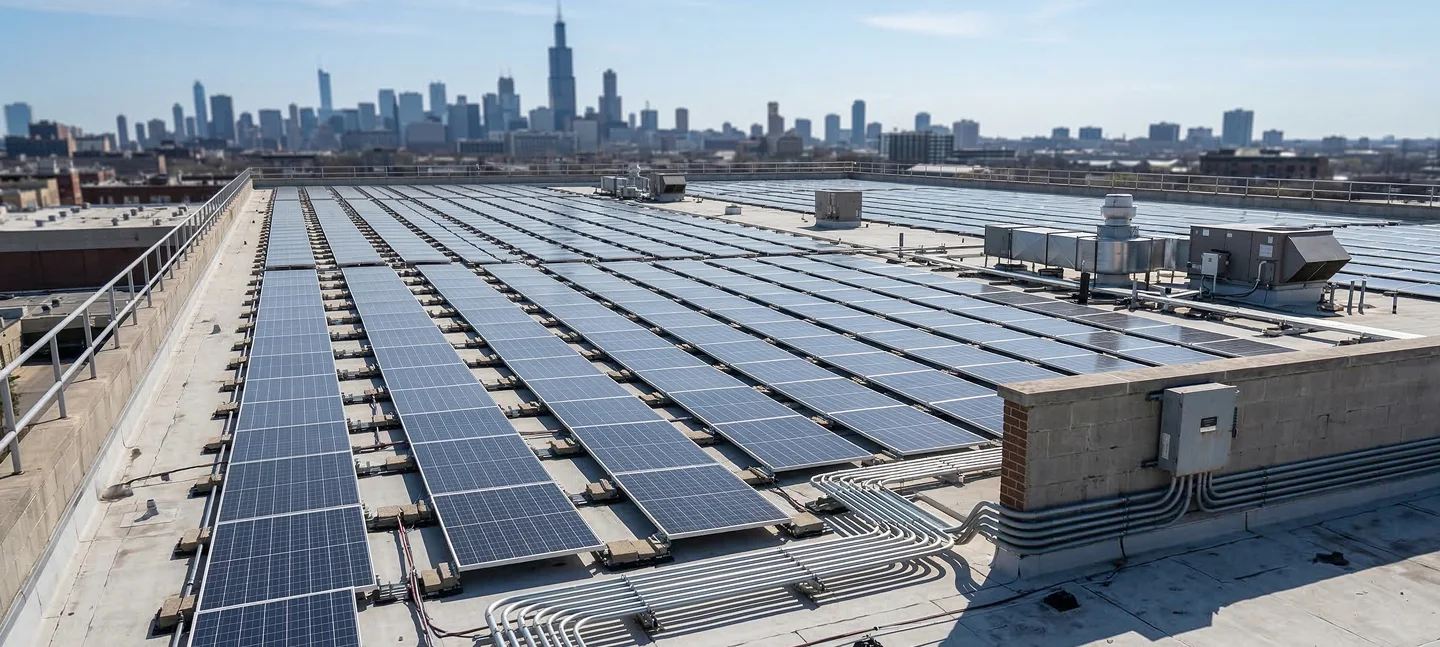

SolarEdge can be a strong fit for commercial rooftops in Chicago when roof conditions, monitoring needs, and incentive capture support the economics.
For most buildings, the decision comes down to usable roof area, electricity usage, Illinois incentives, and whether SolarEdge's design flexibility improves ROI enough to justify the system approach.
A strong ROI for commercial rooftop solar in Chicago comes from the combined value of smart SolarEdge system design, ComEd electricity rate savings, Illinois Shines REC delivery contracts, the federal Clean Electricity Investment Credit, MACRS depreciation, and a well-planned roof layout that maximizes usable space and local site conditions.
Why Is It So Hard to Find a Straight Answer on SolarEdge for Chicago Commercial Buildings?
The opportunity is clear: most available SolarEdge commercial content focuses on product features, while Chicago commercial buyers are looking for local decision-making context.
Rather than technical explanations alone, commercial building owners benefit most from guidance that helps them evaluate whether SolarEdge makes financial sense on a real building in this market.
That is where more useful content can stand out for commercial property owners, operators, and decision-makers who are trying to answer a much more practical question.
They are not just asking what SolarEdge does; they want to know whether it fits the roof, whether the economics work in Chicago, and whether the added flexibility creates enough value compared with a simpler commercial inverter approach.
What is usually missing includes:
- How Illinois incentives affect net project cost
- What realistic local payback may look like
- Whether SolarEdge is a strong fit for a specific building type or roof layout
- What commercial buyers should compare across bids
- How to think about ROI beyond equipment specs
A Chicago building owner needs guidance that connects the equipment to local roof conditions, utility economics, incentive structure, and real investment logic.
When content provides that context, it becomes far more useful for a commercial audience and helps turn technical information into a confident buying decision.
Could SolarEdge Actually Be a Good Fit for Your Commercial Roof in Chicago?
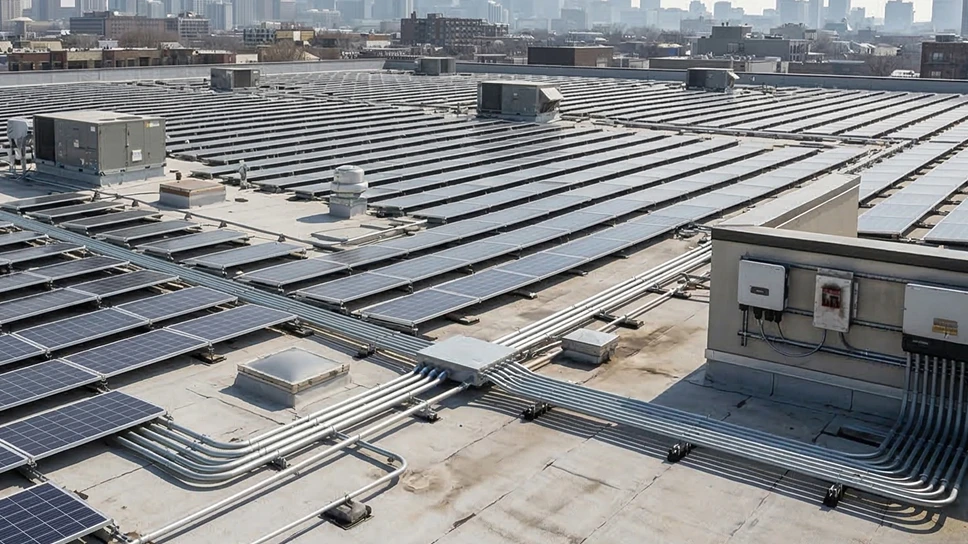
SolarEdge can be a strong fit for commercial roofs in Chicago, especially when the roof has a complex layout, partial shading, or a need for module-level monitoring and design flexibility.
Mechanical equipment, parapets, multiple roof sections, and nearby buildings can all affect layout, production, and whether a more flexible system design improves the economics. That is why the best outcome depends on the building, not just the brand.
At a practical level, SolarEdge gives owners more detailed visibility into system performance and can support a more flexible design on roofs where conditions vary from one section to another.
That can be useful when the project involves uneven layout conditions, partial shading, or a stronger need for monitoring and long-term performance insight.
When SolarEdge Makes Sense in Chicago
SolarEdge makes sense when the roof is too complex for a simple one-size-fits-all approach. In Chicago and the suburbs, that often means buildings where design flexibility and solar panels visibility can improve fit, performance, or operational confidence.
It may be a strong fit for multi-zone rooftops, roofs with mechanical obstructions, buildings with partial shading from nearby structures or rooftop equipment, and building owners who value detailed monitoring and system visibility.
Local roof conditions make this more relevant than a generic product page suggests. Common Chicago commercial roof realities include:
- Mechanical clutter from HVAC and other rooftop equipment
- Parapets that reduce usable solar area
- Shade from surrounding buildings
- Older roof conditions that limit layout options
- Snow and wind design considerations that affect installation strategy
In those situations, the opportunity is not just to confirm that solar works but to see whether a SolarEdge-based design delivers enough added fit, flexibility, and performance to make it the stronger choice over a more standard commercial inverter option in Illinois.
When a Simpler Inverter Design May Be Enough
More flexibility is not always better economics. In some cases, a simpler inverter design may be the better fit when the roof does not present enough complexity to justify the added monitoring depth or design flexibility that SolarEdge can offer.
This is often true when the building has a large, open roof with fewer layout constraints and a cleaner solar path across the array.
If shading is minimal, the roof sections are straightforward, and the project is being judged mainly on installed cost and acceptable performance, a simpler inverter setup may produce a stronger financial result.
A simpler approach may be enough when:
- The roof is large and relatively unobstructed.
- There is partial shading.
- The layout is straightforward.
- The owner is less concerned with module-level visibility.
- The decision is driven mainly by installed cost.
In those situations, the main value driver is often cost discipline rather than added design flexibility.
If the system can already perform well on a clean roof without needing more advanced layout adaptation, the simpler option may offer a better balance of upfront cost, savings, and payback.
On a cleaner, more uniform Chicago commercial roof, a simpler inverter design may still be the more efficient financial fit, especially when the owner is prioritizing strong baseline performance and lower initial cost.
What Incentives Actually Improve Commercial Solar Payback in Chicago?
The incentives that actually improve commercial solar payback in Chicago are the federal tax credit, MACRS depreciation (where applicable), and the Illinois Shines incentive tied to REC delivery contracts.
For many commercial projects, incentives are what make solar financially compelling. The big picture is that payback improves based on how the federal tax credit, MACRS, and Illinois Shines work together for the specific owner behind the building.
For many Chicago commercial projects, the real incentive stack combines the Clean Electricity Investment Credit, MACRS, Illinois Shines, REC delivery contracts, ComEd interconnection considerations, and the ownership structure that determines how much of that value can actually be captured.
Which Incentives Matter Most for Commercial Solar in Illinois
The incentive that matters the most for commercial solar in Illinois is the Clean Electricity Investment Credit, which can significantly reduce upfront project cost. In many cases, the incentive can reach 30% when the project meets the relevant requirements.
MACRS depreciation is the second major incentive in Illinois, which improves project economics by increasing the tax value of the system in the early years for many businesses.
Illinois adds another important layer through Illinois Shines, which creates additional value tied to REC delivery contracts. This program makes a meaningful difference in net project cost and payback.
For many Chicago commercial projects, the core incentive stack comes down to:
- Federal tax credit value
- MACRS depreciation, where applicable
- Illinois Shines incentive value tied to REC delivery contracts
These incentives matter because they can reduce effective net project cost, not just the headline price. A project that looks expensive at first can become much more attractive once federal tax credit value, applicable depreciation benefits, and Illinois Shines REC value are included.
Not every owner gets the same value from the same project. Final payback depends heavily on who owns the system and how that owner can use the available tax benefits. The biggest variables usually include ownership structure, ability to use available tax benefits, project timing, and Illinois Shines program-year terms.
What Does the ROI Really Look Like for a SolarEdge Project in Northern Illinois?
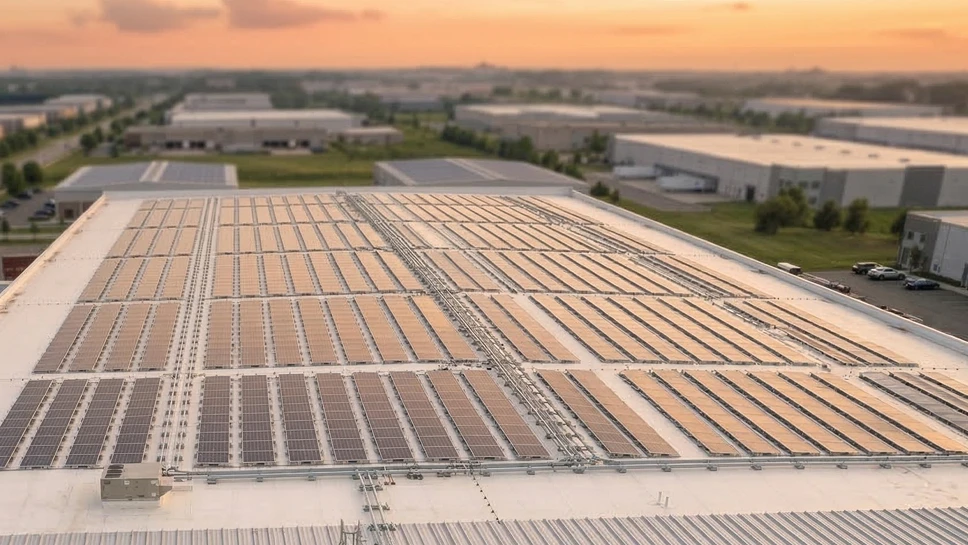
The ROI for a commercial solar project in Northern Illinois usually comes down to a short list of practical inputs: how much usable roof space the building has, how much electricity it uses during the day, how much incentive value the project captures, and whether a SolarEdge-based design improves performance enough to justify the added system approach.
In practice, ROI on a Chicago commercial roof depends on the interaction between SolarEdge power optimizers, usable roof area, daytime load profile, ComEd rate exposure, Illinois Shines value, MACRS, shading from rooftop obstructions, and the system’s final installed cost.
What has the Biggest Impact on Commercial Solar Payback
The factors that have the biggest impact on commercial solar payback are as follows:
- Usable roof area: How much of the roof can actually support solar after accounting for HVAC, setbacks, parapets, and layout constraints.
- System size: Whether the array is large enough to create meaningful savings without oversizing the project.
- Electricity rates: Higher local electricity costs generally improve the value of on-site solar production.
- Building load profile: Buildings with strong daytime demand often get better savings from solar.
- Incentive capture: Federal and Illinois incentives can materially reduce net project cost.
- Installed cost: Roof complexity, equipment choice, and electrical scope can change payback fast.
- Shading and roof complexity: These factors affect both production and system design.
The biggest ROI drivers are usually easy to identify, even if the final model is more detailed. Owners should focus first on the factors that move net cost and annual savings the most.
How to Think About Short-Term Cost Versus Long-Term Value
Simple payback is a good first layer because it helps owners decide whether a project deserves serious consideration.
A commercial solar project can create value in two different ways:
- Short-term: Lower net cost and faster payback
- Long-term: Lower operating expenses, better cost predictability, and continued savings after payback
This is why Chicago-area utility economics matter more than national averages. A generic payback estimate becomes far more useful when it reflects the local factors that matter most: electricity costs, actual building usage, roof constraints, and Illinois incentive value.
For a commercial owner, building-level modeling is more useful than a national benchmark. When comparing proposals, owners can get the best outcome by treating the process like an operating decision, not just a price comparison.
A checklist like this helps keep the evaluation focused on long-term value:
- Roof assumptions: How much usable roof area is actually included?
- System size: Is the array sized to match the building’s actual energy use and goals or simply maximized for available roof space?
- Savings assumptions: What electricity rate and building load profile were used to estimate savings?
- Incentive assumptions: Which incentives are included, and how were they valued in the overall project economics?
- Installed cost: What factors are driving the quoted price, and how do they affect overall project value?
- Roof complexity: How does the design handle shading, obstructions, and layout limits?
- Monitoring: What level of visibility and diagnostics is included?
- Payback logic: Is the estimate based on realistic local assumptions and a credible view of expected savings?
The best bid is not always the cheapest one but the one with the clearest assumptions and the best fit for the building.
What SolarEdge May Change in a Complex Rooftop ROI Model
On a simple roof, ROI can often be evaluated most clearly through incentives, installed cost, and expected production.
On a more complex commercial roof, SolarEdge can affect the economics by improving fit, visibility, and design flexibility.
A SolarEdge-based design may be more attractive when the project includes multiple roof zones, mechanical obstructions, partial shading, uneven solar access across the array, and a stronger need for detailed monitoring.
In those situations, SolarEdge can help the system perform better on a complicated roof and give the owner more operational visibility after installation.
That does not automatically mean the lowest upfront cost, but it can improve the overall value of the project.
On cleaner, more open roofs, the opposite may be true; if shading is low and the layout is simple, a more standard inverter approach may deliver a better financial result.
The real question is whether it improves the economics enough on that specific roof to support a stronger ROI.
How Does SolarEdge Compare With Other Commercial Inverter Options in Illinois?
Compared with other commercial inverter options, SolarEdge is a strong choice for larger systems where design flexibility and individual optimization of your solar panels can improve performance on complex or partially shaded roofs.
It also offers better panel-level visibility and optimization, which can be valuable on more complicated commercial rooftops.
The best comparison usually comes down to four things: flexibility, monitoring, cost, and roof complexity.
SolarEdge tends to be more attractive when a project needs a more adaptable design and deeper performance visibility, while a simpler inverter setup may make more sense when the roof is straightforward, and the owner is focused mainly on upfront cost.
SolarEdge vs Standard Commercial Inverter Setups
SolarEdge may be the better fit when the roof includes more design challenges or when the owner wants more detailed monitoring. A more standard commercial inverter setup can be a strong fit when the layout is cleaner and the project is being evaluated primarily on straightforward economics.
The main advantages and decision points usually look like this:
- Flexibility: SolarEdge can be more useful when roof sections vary or when layout constraints are more complicated.
- Monitoring: SolarEdge may offer more detailed system visibility, which can matter for owners who want closer performance tracking.
- Cost: Simpler systems can be especially appealing when the top priority is achieving the lowest installed cost.
- Roof complexity: More complex rooftops often make a flexible design approach more valuable.
What to Look For Before Requesting a Commercial Solar Proposal
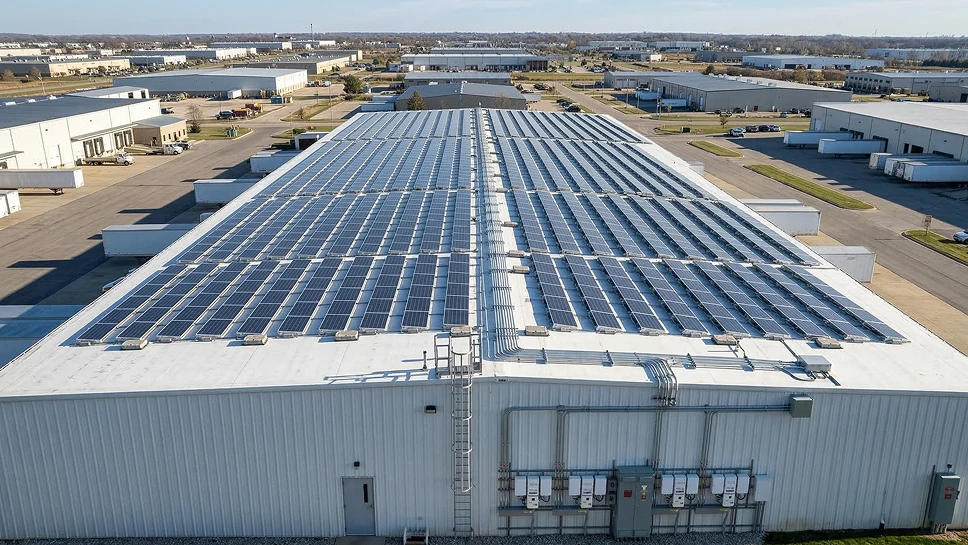
You do not need a full design package to see whether a building is worth evaluating. In many cases, a few basic inputs are enough to show whether SolarEdge or another commercial solar approach is a promising candidate for deeper analysis.
That matters because a commercial solar proposal becomes far more valuable when it is built on solid assumptions from the start. With clear early inputs, owners can evaluate roof fit, incentive value, expected savings, and whether a more flexible system design could add meaningful value.
A commercial solar proposal usually starts with:
- Roof age and usable roof area
- Recent utility bills
- Daytime usage profile
- Service and electrical constraints
- Ownership structure and tax position
- Hold period and capital planning
Taken together, these inputs help answer the questions that matter most before a full proposal is built. They show whether the building has the right combination of roof fit, energy profile, and financial structure to make commercial solar worth pursuing in the first place.
Why Local Building Data Matters More Than Generic Solar Calculators
Local building data matters more than generic solar calculators because it reflects the real factors that drive a commercial project’s outcome in Chicago: roof conditions, usable space, building usage, local utility economics, and actual incentive value.
Generic solar calculators can be a useful starting point for broad awareness, but commercial decisions become much stronger when they are grounded in local building conditions, realistic incentive assumptions, and actual operating economics in Chicago, especially for owners also thinking about broader building performance improvements like commercial building insulation.
In practice, the right process follows these steps:
- Gather the building data.
- Estimate local incentive value.
- Evaluate usable roof area and load profile.
- Model payback realistically.
- Compare equipment approaches only after the economics are clear.
This process gives commercial owners a much clearer path to a sound solar decision, one based on the actual building, the real economics, and the equipment approach that fits best in the Chicago market.
Want to Know If SolarEdge Makes Sense for Your Chicago Commercial Roof?
The best commercial solar roof decisions start with realistic numbers, not assumptions. A preliminary review can usually tell you whether the roof, incentives, and usage profile are strong enough to justify a SolarEdge-based design or a simpler alternative.
Green Attic Roofing already works with commercial clients, so the conversation can stay focused on building fit, incentive logic, and ROI rather than generic product talk, with guidance that can lead naturally into a solar installation in Chicago plan when the numbers make sense.
A useful preliminary review can include a preliminary ROI range, an incentive review, a rooftop fit assessment, and system sizing guidance.
That kind of first-pass analysis gives owners a clearer basis for deciding whether the project is worth pursuing and what system approach makes the most sense for the building.
Frequently Asked Questions
What incentives are available for commercial solar in Illinois?
The main incentives available for commercial solar in Illinois include the federal Clean Electricity Investment Credit, Illinois Shines incentive payments tied to REC delivery contracts, utility Smart Inverter Rebates, and 5-year MACRS depreciation where applicable.
Depending on the project, owners may also qualify for net metering, and eligible rural businesses or agricultural producers may qualify for USDA REAP support.
For many businesses, that incentive stack can significantly improve payback and make commercial solar a much more attractive investment.
What affects commercial solar payback in Chicago the most?
The factors that affect commercial solar payback in Chicago the most are high electricity rates, strong daytime energy use, and how much incentive value the project captures.
Businesses that can combine ComEd savings with the federal Clean Electricity Investment Credit, Illinois Shines incentive value tied to REC delivery contracts, and MACRS depreciation often see especially attractive returns.
System size, roof layout, and shading also matter, but when the building uses a lot of power during the day, payback can be especially strong.
Does SolarEdge make sense on a complex commercial roof?
Yes, SolarEdge can make a lot of sense on a complex commercial roof, especially when there is shading, limited space, or multiple roof angles and orientations.
According to SolarEdge, its DC-optimized design, module-level monitoring, and built-in safety features can improve energy harvest by up to 10% over the system’s lifetime, make layout more flexible, and simplify long-term maintenance.
For many commercial buildings, that combination makes SolarEdge a strong choice when the roof is too complex for a simpler one-size-fits-all design.
How long does commercial solar take to pay back in Chicago?
Commercial solar in Chicago typically pays back in about 5–8 years.
For many businesses, returns can be especially attractive because project economics are often improved by federal tax credit value, 5-year MACRS depreciation, and Illinois Shines REC incentives.
High electricity costs, strong daytime usage, and the right system size can further strengthen the economics.
With a system life of roughly 25–30 years, that can translate into many additional years of long-term energy savings after payback.
Does Illinois Shines apply to commercial solar projects?
Yes, Illinois Shines does apply to commercial solar projects, including on-site distributed generation for businesses and community solar, with project categories that include systems greater than 25 kW and up to 5 MW.
The program provides incentives through REC contracts, which can meaningfully improve project economics, and commercial projects are typically submitted through an Approved Vendor.
For many commercial owners, that makes Illinois Shines a valuable part of the incentive stack, especially because it can strengthen project economics alongside other federal incentives.
How much roof space does a commercial solar system need?
Commercial solar systems generally need about 65–75 sq ft of unobstructed roof space per 1 kW of installed capacity, so a 100 kW system typically fits within roughly 8,000–10,000 sq ft of roof area.
Many commercial buildings can support a strong solar layout, and final space needs are shaped by factors like panel efficiency, fire safety setbacks, roof obstacles such as HVAC units or skylights, and structural capacity.
In many cases, higher-efficiency panels can reduce the amount of roof space required.
Can a simpler inverter setup outperform SolarEdge on some commercial buildings?
Yes, a simpler inverter setup can outperform SolarEdge on some commercial buildings, especially on large, flat, unshaded roofs with a consistent layout. In those cases, traditional string inverter systems can offer lower upfront cost, fewer rooftop components, and very strong overall economics.
On more complex or partially shaded roofs, SolarEdge can still offer added value through greater flexibility, panel-level optimization, longer strings, and more flexible system design.
How do you know if SolarEdge is worth the added cost on a commercial roof?
You know SolarEdge is worth the added cost on a commercial roof when the building has partial shading, multiple roof orientations, layout constraints, or a need for module-level monitoring and control. In those situations, the added design flexibility and production gains can make the premium worthwhile and strengthen long-term project value.
A smart way to confirm this is to compare a SolarEdge design with a standard string inverter design using a detailed shading analysis and production model, so you can see which option delivers the strongest mix of output, flexibility, and financial return for the building.