


The new Tesla solar panels are typically worth it if you value a sleek, low-profile design and are looking for a cost-effective solar solution.
Tesla is stepping into the spotlight with its new solar panels (TSP-415 and TSP-420) as a streamlined option for residential use designed to pair naturally with Powerwall.
In this article, let’s talk about the new Tesla Solar Panels, their specifications, cost, and whether they are worth it for residential use.
Key Highlights
- Tesla now offers its own solar panel lineup with two high-performance options: TSP-415 (415W, 20.3% efficiency) and TSP-420 (420W, 20.5% efficiency).
- Panels are engineered in California and assembled in Buffalo, New York, supporting a domestic supply chain.
- It uses the same cascading cell technology as Tesla Solar Roof cells to create 18 independent power zones, which is 3x more than conventional panels.
- The design is all-black and low-profile, with a matte finish and no visible fasteners for a cleaner look on most roof types.
- Installation is designed to be faster and less invasive, with claims of 33% quicker installs, 25% less rail material, and up to 15% fewer roof penetrations.
- These panels were built for harsh conditions with an operating range of -40°F to +185°F and certifications including IEC/UL 61730 and IEC 61215.
- Backed by a 25-year warranty, Tesla Solar Panels can be paired with Powerwall for energy storage and backup during outages.
What’s New with Tesla’s Latest Solar Panels
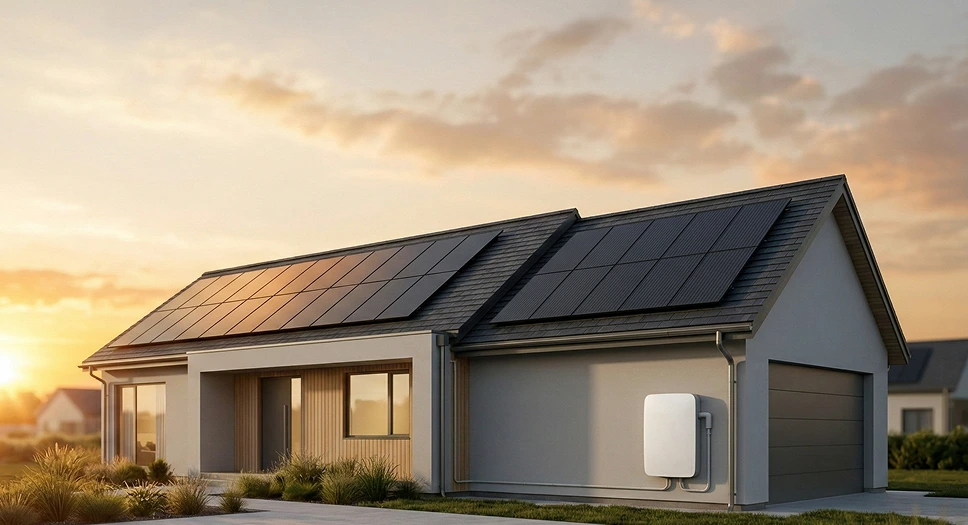
Tesla introduced new solar panels, TSP-415 and TSP-420, to offer streamlined panel options designed for strong residential performance. The TSP-415 model delivers 415 W at 20.3% efficiency, whereas the TSP-420 model delivers 420 W at 20.5% efficiency for a modest step up in performance.
Tesla’s latest solar panels are designed to produce more energy in real-world conditions, especially when parts of the array are shaded, thanks to a higher number of independent power zones than conventional panels.
They also deliver a cleaner, more integrated look with all-black cascading cells, low-profile skirts, built-in mounting, and no visible fasteners for a smooth finish on the roof. With a 25-year warranty, they are built for long-term performance and savings.
For even more control and resilience, you can pair the panels with a Tesla Powerwall to store excess energy and keep essential circuits running during outages through the Tesla Energy ecosystem.
Tesla Solar Panel Specs
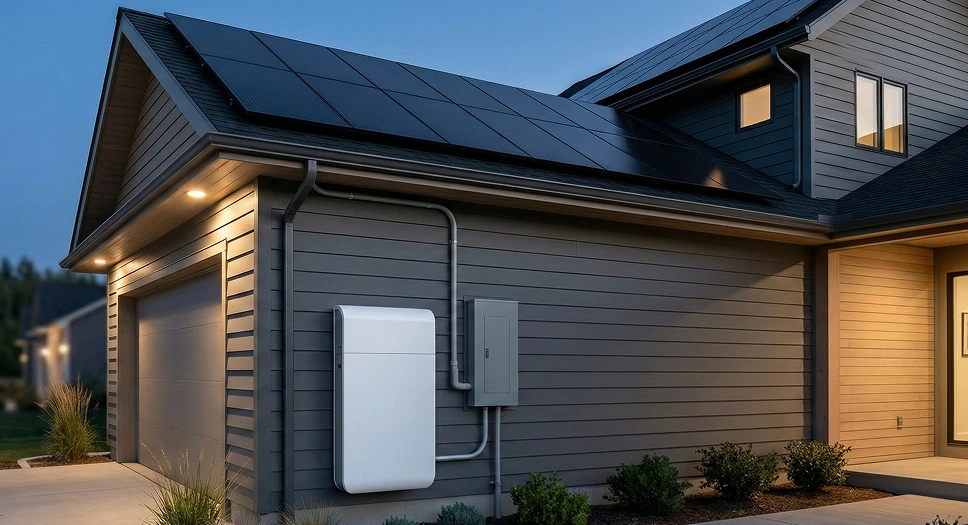
In this section, we break down the key specifications of Tesla Solar Panels that matter most to homeowners, including construction and dimensions, electrical ratings, operating temperature range, and warranty coverage, so you can plan with confidence.
Build and Design
Both models use a black anodized aluminum alloy frame, which helps create a uniform all-black appearance while also adding corrosion resistance and long-term structural strength.
Both models are built to the same size at 1805 x 1135 x 40 mm, which helps you map out roof coverage and panel spacing with confidence. The panels also have a consistent low profile across the array.
Each panel weighs 22.3 kg (49 lbs.), which is in line with most modern residential solar modules and helps installers plan safely for roof load, on-roof handling, and overall installation logistics.
Electrical Specifications
In terms of the open circuit voltage (Voc), the TSP-420 model is only slightly higher at 40.95 V versus 40.92 V for the TSP-415 model.
The short circuit current (Isc), which refers to the maximum current the panel can produce if its output is shorted, of the TSP-420 model is slightly higher at 13.03 A compared with 12.93 A on the TSP-415 model.
Both models are designed to operate safely in higher-voltage arrays, with a maximum system voltage rating of DC 1000 V for series-string setups. This rating provides flexibility for stringing panels efficiently and confirms the modules are built to handle higher-voltage system configurations safely.
Operating Conditions and Durability
Both panels are designed to keep working in harsh weather, with an operating temperature range of -40°F to +185°F.
In practical terms, that means they are built to produce power through deep winter cold and intense summer heat without shutting down under normal operating conditions.
Warranty and Certification
Tesla includes a 25-year warranty with both the TSP-415 and TSP-420 models, which is meant to cover long-term ownership and give homeowners confidence that the system is protected well beyond the payback window for many installs.
Tesla Solar Panels meet IEC/UL 61730 and IEC 61215 standards, which are widely recognized benchmarks for solar module safety and long-term reliability.
Tesla Solar Panel Cost
The cost of installing Tesla solar roof is as low as $60 per sq ft. Traditional solar pricing is typically $2.90 to $3.50 per watt, offering a straightforward way to compare different installers and equipment packages.
Tesla Powerwall 3 is typically priced at around $14,500 to $16,500 per unit, making it a premium add-on that can significantly boost energy independence and backup protection.
Keep in mind these prices do not include the 30% Federal Solar Tax Credit, which can reduce your net cost on the eligible solar portions of the installation and the Powerwall.
Factors Affecting Solar Panel Cost
Installing a solar system does come with a significant upfront investment, but it is also one that can deliver long-term savings and more control over your energy costs.
Here are some of the factors that affect the overall cost of installing one:
- Sales and marketing cost: It is the largest expense incurred by most solar companies. It can account for 18% of the final price of the solar panel system.
- System design: Each installer brings a unique design approach, and that level of customization can be reflected in the final system price.
- Equipment: Solar pricing reflects the full system, not just the panels, because it also covers inverters, wiring and conduit, racking and mounting hardware, monitoring features, and any electrical panel upgrades that help everything run smoothly.
- Labor cost: The more panels in your design, the more on-roof and electrical work is included to deliver a fully optimized solar array, affecting the overall cost.
- Service and warranty: Professional installers often include product and performance warranties as part of the overall package, adding long-term protection and peace of mind.
Overall, the total solar price includes the full system build, installation, and long-term support, not only the panels. Reviewing quotes line by line, especially design assumptions and warranty coverage, helps you get the best value and avoid surprises later.
Why Choose Tesla Solar Panels?
Here are some of the reasons why you should consider Tesla Solar Panels for your residential solar project:
- Domestic manufacturing: Tesla Solar Panels are engineered in California and assembled in Gigafactory Buffalo, New York, allowing Tesla to leverage federal manufacturing incentives and secure a local supply chain.
- Energy efficiency: Tesla Solar Panels are available in 415W (TSP-415) and 420W (TSP-420) variants, boasting higher energy production even in shaded conditions.
- Modern aesthetic: It has an all-black, monochromatic design with a matte finish and no visible bus ribbons or fasteners for a sleek, modern look that blends with various roof types.
- Higher energy output: It uses the same cascading cell technology as Tesla Solar Roof cells to create 18 independent power zones, which is 3x more than conventional panels. This results in decreased energy loss in shaded conditions and produces more energy.
- Low-profile design: It has a low-profile finish that is universally compatible with shingle, tile, metal, and flat roofs.
- Easy installation: Tesla Solar Panels install 33% quicker than other panels on the market while using 25% less aluminum rails. It also has up to 15% fewer roof penetrations while preserving structural integrity and lowering costs
- Durability: It was engineered for weather resistance, with an operating temperature range of -40°F to +185°F, and certifications like IEC/UL 61730 and IEC 61215.
Overall, Tesla Solar Panels are a solid choice for homeowners who want high efficiency, a sleek low-profile look, fast installation, and durable performance backed by U.S.-based manufacturing and trusted certifications.
Final Verdict: Are Tesla’s New Solar Panels Worth It?
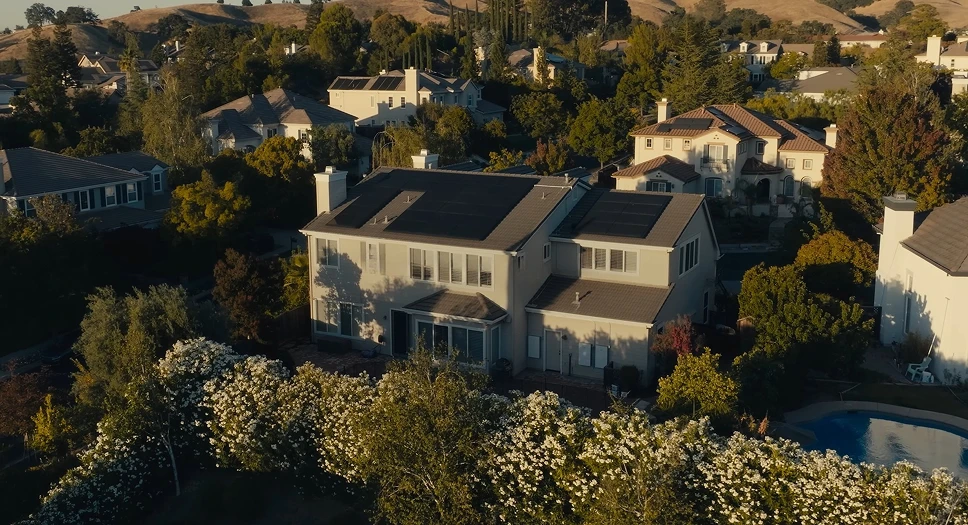
Tesla’s new solar panels are worth it for homeowners who want a sleek all-black look, strong performance even under the shade, and a streamlined install backed by a 25-year warranty and reputable certifications.
They make the most sense if you also want a Tesla-first ecosystem, especially when pairing with Powerwall for backup power and smarter energy control through the Tesla app.
Go Solar with Tesla and Green Attic Roofing
Green Attic Roofing supports you through the full solar journey, from your initial order and system design to installation and beyond.
We create a setup that fits your home, matches your energy goals, and leaves room to grow as your needs change, while also managing permits and utility approvals so the process stays simple.
After your Tesla Solar Panels are installed and protected by a 25-year warranty, our team remains available for continued support, including performance check-ins and service whenever you need it.
Frequently Asked Questions
What is the lifespan of a Tesla solar panel?
The lifespan of Tesla solar panels is generally 25 to 30+ years, and many continue producing power well beyond that with normal wear.
They include a 25-year warranty, which guarantees the panels will continue to work and provide about 80% to 85% of their original output, with a gradual, predictable efficiency decline over time. Thus, you can expect dependable long-term energy savings.
How many solar panels do I need for a 2,000 square foot house?
A 2,000 sq ft house typically needs about 16 to 22 solar panels (using 350W–400W panels), and that range is a solid starting point for achieving meaningful, long-term bill savings.
In most cases, this adds up to roughly a 6–8 kW solar system, which can cover a large share of a typical home’s electricity use, and in many homes can get you very close to 100% depending on conditions.
For the best results, you can size it with confidence by matching your system to your last 12 months of usage (kWh), then fine-tuning for local sunlight, roof shading, roof direction, and big add-ons like an EV charger or pool pump.
The upside is simple: once it’s dialed in, you get a setup that performs reliably and helps lock in predictable energy costs for years.
Why is my electric bill so high if I have solar panels?
A high electric bill with solar panels can simply mean your home is using more electricity at certain times than your system is producing, especially in the evening after the sun goes down, but your solar is still offsetting daytime usage and helping you save.
It can also happen if output is reduced by shade, dirt, or a system issue, or if your utility’s net metering rules and time-of-use rates credit daytime exports less than what you pay at night.
The good news is that most causes are fixable by checking your monitoring app, cleaning panels, shifting heavy usage to daytime, and considering a solar battery like Tesla Powerwall to use more of your own solar power after sunset.
Can I run AC with a solar panel?
Yes, you can run an AC with solar panels as long as your system is properly sized with the right inverter and a battery if you want cooling at night.
For most setups, 2-3 panels can cover window AC needs, 4-8 panels fit many mini-splits nicely, and 10-18 panels support central AC, depending on your AC and sun hours. With an efficient setup, solar-powered cooling can be a great way to stay comfortable while lowering grid use.
What is the biggest drawback of solar panels?
The biggest drawback of solar panels is that they rely on sunshine to generate electricity, which is exactly why pairing them with net metering or a battery creates a smooth, dependable energy setup.
The bright side is that this is easy to plan around by staying connected to the grid or adding battery storage, so you can still enjoy reliable power while maximizing long-term savings.
Can a house run 100% on solar?
Yes, a house can run 100% on solar by installing a properly sized panel system paired with enough battery storage to cover nighttime use and cloudy days.
For full energy efficiency, many homeowners upgrade appliances and insulation and shift heavier electricity use to sunny hours, which helps solar cover more of their needs.
With smart sizing and energy management, 100% solar can be a reliable path to greater energy independence.
What is the 20% rule for solar panels?
The 20% rule for solar panels is a helpful sizing tip that recommends designing your system to produce about 20% more electricity than your average annual consumption, giving you a comfortable buffer for strong, consistent performance.
This extra cushion or buffer helps your solar setup keep performing strongly over time by accounting for real-world factors such as inverter and wiring losses, panel aging, dust, and lower output on cloudy days.
For example, if you use 10,000 kWh per year, you would size for about 12,000 kWh per year (10,000 x 1.2), which gives you a nice buffer for dependable results in real-world conditions.
How much money do you save on an electric bill with solar panels?
With solar panels, homeowners can save around $1,500 per year on electric bills. Many households cut their bills by about 70% to 90%, depending on system size, utility rates, and net metering.
Over a typical 25-year lifespan, that can add up to roughly $50,000 to $100,000+ in total savings, and some homeowners even reach near-zero electric bills aside from small fixed utility fees.
What happens if my solar panels produce more electricity than I use?
When your solar panels produce more electricity than you use, the extra power is automatically sent back to the grid, and you typically earn net metering credits on your utility bill.
Those credits can help cover the electricity you use later at night or on cloudy days, which can lower future bills and make your solar savings even stronger. In some areas, if you end the year with a surplus, the utility may pay out remaining credits at a wholesale rate.
Are the new Tesla Solar Panels compatible with my existing Tesla system, inverter, or Powerwall?
Yes, Tesla’s new solar panels are compatible with Powerwall 2 setups, since Powerwall 2 can be AC-coupled to add storage and work smoothly with solar.
If you are expanding an older Tesla solar array, the new panels are often set up as a separate, second system with its own inverter, which helps keep performance optimized and makes everything easy to track in the Tesla app.
If you are looking at Powerwall 3, you can get a clean, streamlined setup and strong performance, as it is built for new, efficient DC-coupled installations. A Tesla Certified Installer can quickly confirm the best fit based on what you already have.
If I already have solar, is it worth it to upgrade with Tesla Solar Panels, or should I keep what I have?
If you already have a solar system that is performing well, you will often get the best value by keeping it and putting your upgrade budget toward higher-impact add-ons, since swapping out working panels typically costs more in labor than the modest efficiency boost delivers.
A more rewarding upgrade is adding a Tesla Powerwall or installing a second Tesla system to increase capacity while keeping what already works. Upgrading your solar system makes sense if your system is 10 to 15+ years old, underperforming, or if you are already doing a roof replacement, where a Tesla upgrade can fit naturally into the project.
Will the new Tesla Solar Panels look better on my roof, or will they still be bulky and obvious?
Yes, the new Tesla Solar Panels are designed to look much better on your roof with their sleek, all-black finish and low-profile mounting.
It also uses hidden hardware for a clean, streamlined install that helps the panels blend naturally into your roofline. They sit about 1.57 inches off the roof, so they look far less bulky than older, rack-mounted systems while still delivering a clean, modern curb-appeal upgrade.
Does pairing the new Tesla Solar Panels with a Powerwall really help, or is it an expensive add-on I do not need?
Yes, pairing the new Tesla Solar Panels with a Powerwall can be a big help if you use a lot of electricity at night, have less favorable net metering or time-of-use rates, or want reliable backup during outages.
A Powerwall lets you store solar energy during the day and use it when it matters most, making it a worthwhile investment.
Powerwall 3 can be especially streamlined with new solar thanks to its integrated inverter, which can simplify installation and improve overall efficiency.
If you have 1:1 net metering, low nighttime usage, and rare outages, you may already get excellent value from solar alone, and a Powerwall becomes more of a comfort and resilience upgrade than a must-have.
Could changes in net metering or utility policies make Tesla solar a bad deal?
Yes, changes in net metering or utility policies can make Tesla a bad deal, but the impact is usually manageable when you plan for it, since shifts from 1:1 credits to lower net billing rates mainly mean you will get the best value by using more of your solar power at home instead of exporting it.
The good news is you can protect your savings by designing around self-consumption, often by pairing solar with a Powerwall to use more of your energy at home during peak-priced hours.
In many areas, installing before policy changes may also let you get grandfathered into better rates for years, which can keep the economics strong.
If I install Tesla Solar Panels now, what happens if I need roof repairs later?
If you install Tesla Solar Panels now and need roof repairs later, you can use a removal and reinstallation service that temporarily takes the panels off, lets the roof work get done, and then puts your system right back in place for a smooth, end-to-end solution.
You can submit a Panel Removal and Reinstallation request in the Tesla app, and pricing is based solely on your system size and roof layout, with many projects coming in around the low thousands.
With a little advance scheduling, Tesla or a qualified installer can handle the removal and reinstallation smoothly, so your solar system is back up and running right after the roof work is finished.


